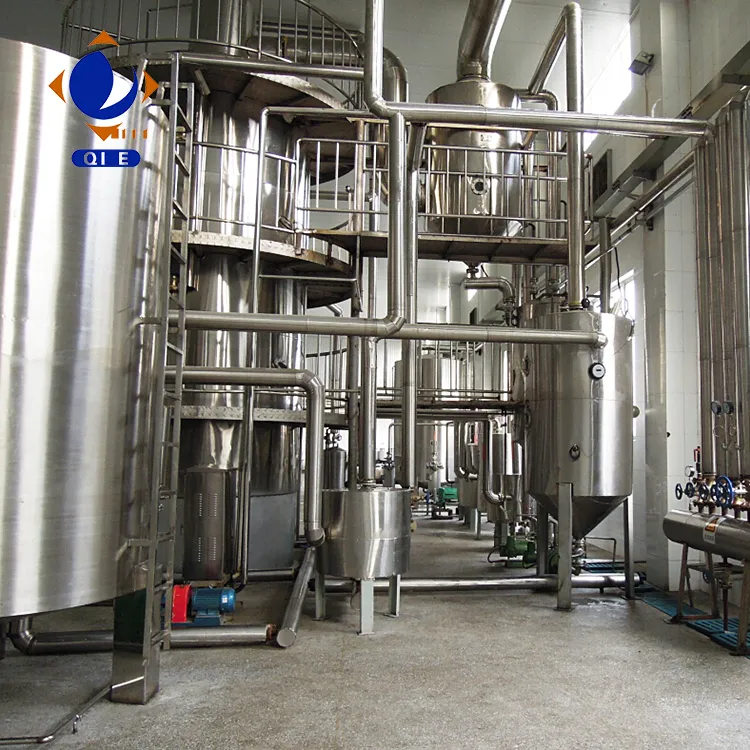
In Nigeria and across West Africa, many small to mid-sized palm oil refineries still rely heavily on manual operations—leading to inconsistent quality, higher labor costs, and compliance risks. According to a 2023 report by the International Council of Palm Oil Producers (ICPOP), over 68% of African processors operate with minimal automation, resulting in an average yield loss of 4–7% per batch due to human error.
Cold pressing followed by hot pressing is widely used in palm oil refining to remove free fatty acids and improve clarity. However, without precise control over temperature, pressure, and time, this process can easily lead to overheating, oxidation, or under-processing—each affecting both yield and shelf life.
A study from the Nigeria Institute of Food Science & Technology (NIFST) found that mills using basic PLC-based systems saw:
The real power of PLC automation lies in its ability to create closed-loop feedback mechanisms:
| Process Step | Key Parameters Controlled | Impact of Automation |
|---|---|---|
| Pre-treatment | Moisture content, temperature, pressure | Reduces raw material waste by up to 5% |
| Refining | Neutralization pH, bleaching time, deodorization temp | Improves oil stability and meets EU standards |
| Packaging | Fill volume, seal integrity, labeling accuracy | Minimizes spillage and enhances brand trust |
For managers considering automation, start with these proven steps:
Most importantly, ensure your system complies with ISO 22000 food safety standards and local environmental regulations—a must for export-ready facilities.
Pro Tip: Use historical data from your PLC logs to identify bottlenecks—many mills discover that “slow cooling” after deodorization causes 30% of downtime. Adjusting fan speed settings based on real-time temps cuts this by half.
Automation isn’t just about saving labor—it’s about building a resilient, scalable operation that meets global buyer expectations for consistency, traceability, and sustainability.
Explore our full suite of PLC-integrated refiners designed for African markets—engineered for reliability, ease of use, and long-term ROI.
See How It Works → Small-scale palm oil refining process
Palm oil degumming and deacidification techniques
Application of PLC control system in oil mills
Solutions to common problems in palm oil refining
Operation guide for export-oriented palm oil equipment
small-scale palm oil refining
mini palm oil refining equipment
equipment maintenance and safety
PLC control system
palm oil production process
economical palm oil refining machine
small palm oil processing equipment
palm oil refining process
refinery maintenance tips
production efficiency improvement
small palm oil refining line
PLC control system
automated palm oil production
economic palm oil equipment
palm oil processing case study
economic palm oil refining machine
palm oil refining process
refining machine maintenance
PLC control system in oil processing
oil refining equipment troubleshooting
Small-scale palm oil refining process
Palm oil degumming and deacidification techniques
Application of PLC control system in oil mills
Solutions to common problems in palm oil refining
Operation guide for export-oriented palm oil equipment
small-scale palm oil refining
mini palm oil refining equipment
equipment maintenance and safety
PLC control system
palm oil production process
economical palm oil refining machine
small palm oil processing equipment
palm oil refining process
refinery maintenance tips
production efficiency improvement
small palm oil refining line
PLC control system
automated palm oil production
economic palm oil equipment
palm oil processing case study
economic palm oil refining machine
palm oil refining process
refining machine maintenance
PLC control system in oil processing
oil refining equipment troubleshooting



.png?x-oss-process=image/resize,h_100,m_lfit/format,webp)
.png?x-oss-process=image/resize,h_100,m_lfit/format,webp)
.png?x-oss-process=image/resize,h_100,m_lfit/format,webp)