Home > News > Comprehensive Process and Key Technologies of Palm Oil Refining Line: Degumming, Bleaching, and Deodorization

Comprehensive Process and Key Technologies of Palm Oil Refining Line: Degumming, Bleaching, and Deodorization

QI ' E Group
2025-10-23
Industry Research
This article provides an in-depth exploration of the degumming, bleaching, and deodorization processes in the cost-effective palm oil refining production line by QIE Group. It delves into how core technologies—such as vacuum systems, adsorbent selection, and precise temperature control—ensure efficient and stable operation. Combining industry research and real-world case studies, the article highlights how small and medium enterprises (SMEs) leverage automation control (including PLC systems), energy-saving designs, and modular configurations to reduce operating costs and enhance capacity while adapting to diverse global climates and raw material conditions. The content is tailored to meet search intent, offering practical technical guidance and decision-making support for grain and oil processing professionals.
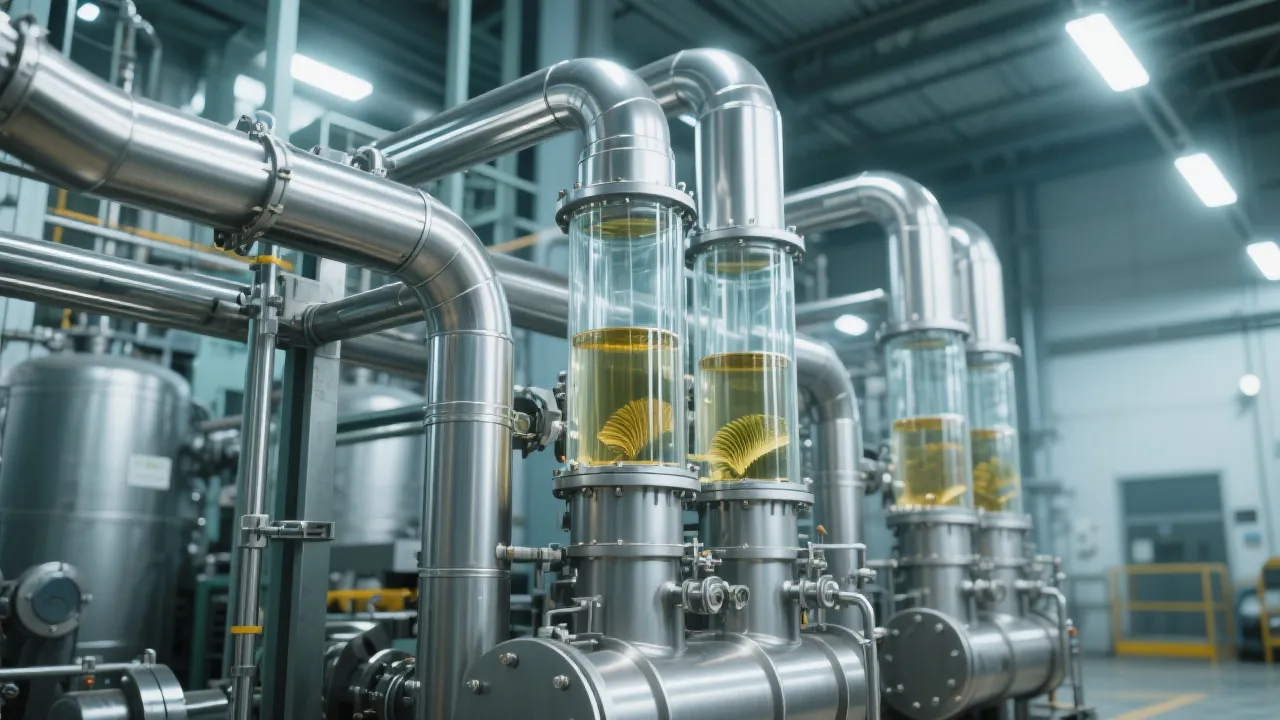
Palm oil refining process flow chart illustrating degumming, bleaching, and deodorizing stages

Comprehensive Process and Key Technologies in Palm Oil Refining: Degumming, Bleaching, and Deodorization

The palm oil refining industry is evolving rapidly, driven by demands for higher efficiency, cost-effectiveness, and adaptability to diverse raw material qualities. QIE Group’s economical palm oil refining line integrates automated degumming, bleaching, and deodorizing steps with cutting-edge process controls, enabling small and medium enterprises (SMEs) to optimize their production cycles and achieve stable, high-quality output. This analysis delves into the core refining steps, examines technical innovations, and highlights practical applications tailored for varying global climates.

1. Core Refining Steps: Degumming, Bleaching, and Deodorizing

The refining of crude palm oil primarily involves three sequential steps:

  • Degumming: Removal of phospholipids and impurities that cause oil cloudiness. Typically conducted by mixing the oil with water or acid solutions to hydrate gums for subsequent separation.
  • Bleaching: Adsorption of pigments (carotenoids and chlorophyll) and trace metals using bleaching earth and activated carbon under controlled temperature and vacuum conditions.
  • Deodorizing: High-temperature steam distillation under vacuum to eliminate free fatty acids, odor-causing volatiles, and residual contaminants.

Each step utilizes specialized equipment — such as high-shear mixers for degumming, vacuum bleaching tanks with precision temperature control, and packed column deodorizing units — to maintain process consistency and product quality.

Palm oil refining process flow chart illustrating degumming, bleaching, and deodorizing stages

2. Key Technologies Employed by QIE Group

QIE Group enhances standard refining procedures through several proprietary innovations:

  • PLC-Based Automation: Programmable Logic Controllers regulate parameters such as temperature, vacuum pressure, and residence time, minimizing human error and optimizing energy use.
  • Vacuum Systems with Energy Recovery: Advanced vacuum pumps integrated with condensers recover steam heat, reducing fuel consumption up to 15% compared to traditional sets.
  • Optimized Adsorbent Selection: Tailored bleaching earth blends with optimal pore size distributions improve pigment removal rates by up to 20%, with lower adsorbent quantities required.
  • Modular Configuration: Flexible assembly facilitates scaling production capacity from 5 to 50 tons per day while enabling easy installation, maintenance, and equipment upgrades.
“Since integrating QIE Group’s automated refining line, our plant in Malaysia achieved consistent oil quality despite raw materials with variable moisture content — a common challenge in tropical climates.” – Industry Client Feedback

3. Efficiency Gains: Automation vs. Traditional Methods

Comparative studies reveal significant advantages of automated refining systems:

Parameter Traditional Manual Process QIE Group Automated System
Energy Consumption (per ton) ~350 kWh ~295 kWh (15% reduction)
Oil Yield 92-94% 95-97%
Annual Average Downtime >8% <2%
Maintenance Frequency Monthly Quarterly (typically)

4. Adapting to Diverse Climates and Raw Material Conditions

Particularly in tropical regions such as Southeast Asia, raw palm oil often has elevated moisture content (up to 3-5%), which can interfere with downstream refining quality. Penguin’s system compensates by:

  • Adjusting degumming parameters dynamically via real-time sensor feedback.
  • Employing temperature ramp controls in bleaching to optimize adsorbent efficacy without overheating.
  • Maintaining stringent vacuum levels during deodorizing to ensure effective volatile removal at lower temperatures, preventing thermal degradation.

These features enable the refinery to maintain stable yields and superior oil clarity year-round, regardless of raw material variability.
Graph showing stability of palm oil refinery output across seasonal moisture variations in Southeast Asia

5. End-to-End Support: Design, Installation, and After-Sales Service

Recognizing SMEs’ need for turnkey reliability, QIE Group provides:

  • Customized Layout Designs: Tailored to facility size and logistics for seamless integration.
  • Professional Installation Teams: Minimizing commissioning time and ensuring compliance with safety and quality standards.
  • Comprehensive Training: Empowering operators to utilize PLC systems effectively and execute routine maintenance.
  • Responsive After-Sales Support: Including remote monitoring and rapid troubleshooting, reducing unplanned downtime.
“The combination of reliable technology and end-to-end service helped our refinery achieve less than 2% downtime annually, ensuring a smooth supply chain.” – Southeast Asian Client
QIE Group technical support team assisting clients during palm oil refining plant setup

Engage with Industry Experts: Share Your Questions Below

Have specific challenges in palm oil refining? Leave your queries or insights in the comment section to connect with our technical professionals and community peers. Your feedback drives continuous innovation in refining solutions.

Name *
Email *
WhatsApp *
Message*

Recommended Products

Related Reading

Vietnam Palm Oil Processing Case: Doubling Efficiency with an Economical Refining Line

2025-10-21 | https://shmuker.oss-accelerate.aliyuncs.com/tmp/temporary/60ec5bd7f8d5a86c84ef79f2/60ec5bdcf8d5a86c84ef7a9a/20240305160636/lable.png economical palm oil refining line small and medium palm oil processing equipment palm oil production efficiency case full-process automated palm oil refining palm oil processing solutions

Enhancing Production Stability in Small Palm Oil Refining Lines Through PLC Automation: A Practical Case Study

2025-10-11 | https://shmuker.oss-accelerate.aliyuncs.com/tmp/temporary/60ec5bd7f8d5a86c84ef79f2/60ec5bdcf8d5a86c84ef7a9a/20240305160636/lable.png small palm oil refining line PLC control system automated palm oil production economic palm oil equipment palm oil processing case study

FAQ on Common Palm Oil Refining Process Problems: Professional Answers to Ensure Stable Operation and Optimization of Production Lines

2025-09-17 | https://shmuker.oss-accelerate.aliyuncs.com/tmp/temporary/60ec5bd7f8d5a86c84ef79f2/60ec5bdcf8d5a86c84ef7a9a/20240305160636/lable.png Palm oil refining process Small and medium - sized enterprise grain and oil equipment Palm oil refining production line Refining deodorization technology Equipment selection guide

Real-World Case Study: Maintenance Tips for Economical Palm Oil Refining Machines to Extend Equipment Life and Ensure Stable Production

2025-09-27 | https://shmuker.oss-accelerate.aliyuncs.com/tmp/temporary/60ec5bd7f8d5a86c84ef79f2/60ec5bdcf8d5a86c84ef7a9a/20240305160636/lable.png palm oil refining machine maintenance economical oil refining equipment care PLC system保养 in palm oil processing pressure vessel inspection checklist oil refining process optimization

In - depth Analysis of Core Technologies of Small and Medium - Sized Palm Oil Refining Equipment and PLC Control System Application Solutions

2025-08-31 | https://shmuker.oss-accelerate.aliyuncs.com/tmp/temporary/60ec5bd7f8d5a86c84ef79f2/60ec5bdcf8d5a86c84ef7a9a/20240305160636/lable.png Palm oil refining machine PLC control system Small - scale refining production line Palm oil processing equipment Equipment maintenance skills

Hot Products

Popular articles
H6cd38d71b8074180b65c969c7144b55d4.jpg
H1b93419658624000a59b8ac44e40c964J.jpg
H4ce587762a2f44a5bcf22e540c6703b2J.jpg
palm9-1.jpg
Hb8cecaea3bad4491b9cd8e6b6918f25eg.jpg
H650155a4a1cc4d20b3e1941076998882I.jpg
营销主题配图_1752720699308.jpg
H264d8aacdc804ece9848bbdd42fdf582v.jpg
H0ad72d784eeb4818be0c56391c03efaar.jpg
palm12-2.jpg
Recommended Reading
Contact us
Contact us
https://shmuker.oss-accelerate.aliyuncs.com/tmp/temporary/60ec5bd7f8d5a86c84ef79f2/60ec5bdcf8d5a86c84ef7a9a/thumb-prev.png