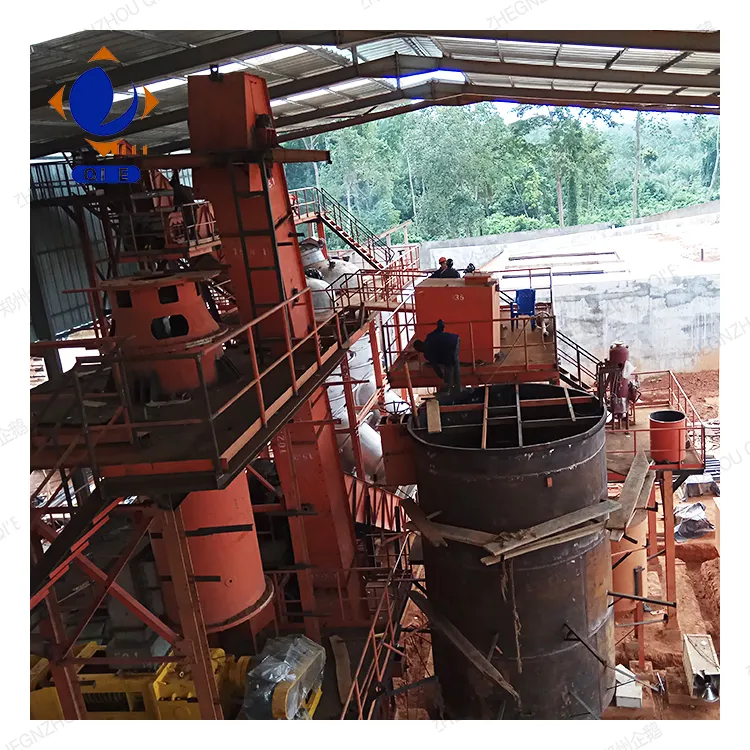
In the global palm oil refining industry, small and medium-sized oil mills often face challenges such as unstable oil quality and high energy consumption. These issues not only affect the production efficiency of enterprises but also restrict their competitiveness in the international market. This guide aims to provide a comprehensive solution for palm oil refining, focusing on the adjustment of cold - pressing and hot - pressing process parameters and the resolution of common problems.
Palm oil refining is a complex process. In traditional refining methods, the instability of oil quality is a major problem. According to industry statistics, nearly 30% of small and medium - sized oil mills struggle with inconsistent oil quality, which can lead to customer complaints and a decrease in market share. Additionally, high energy consumption is another significant challenge. On average, energy costs account for about 20 - 30% of the total production cost in palm oil refining, putting a heavy burden on enterprises.
Cold - pressing of palm oil involves extracting oil at a relatively low temperature, usually below 60°C. This method can preserve more nutrients and natural flavors in the oil, resulting in high - quality refined oil. Hot - pressing, on the other hand, is carried out at a higher temperature, around 100 - 120°C, which can increase the oil yield. The combination of these two methods can achieve a balance between quality and quantity. For example, cold - pressed oil can meet the high - end market demand for high - quality products, while hot - pressed oil can ensure sufficient production volume.
The synergistic operation of cold - pressing and hot - pressing processes requires precise control of key parameters. Temperature control is crucial. In the cold - pressing process, the temperature should be maintained between 40 - 60°C to ensure the stability of nutrients. In the hot - pressing process, the temperature range of 100 - 120°C can effectively improve the oil yield. Another important parameter is the degumming efficiency. By optimizing the degumming process, the impurity content in the oil can be reduced, and the oil quality can be improved. Generally, the degumming efficiency should reach over 90% to ensure high - quality refined oil.
In actual production, there are several common problems. One of them is the emulsification problem. Emulsification can lead to difficulties in oil - water separation and reduce the oil yield. To solve this problem, adjusting the pH value of the oil - water mixture and adding appropriate demulsifiers can be effective. Another problem is the optimization of water washing. By controlling the water temperature and washing time, the impurity removal effect can be improved. For example, the water temperature for washing should be around 60 - 70°C, and the washing time should be about 15 - 20 minutes.
Let's take a medium - sized oil mill as an example. Before adopting the combined cold - pressing and hot - pressing process, the oil quality was unstable, and the energy consumption was high. After implementing the process adjustment measures recommended in this guide, the oil quality stability increased by 20%, and the energy consumption decreased by 15%. Through specific parameter control and problem - solving, the enterprise successfully improved its product competitiveness and export capacity.
We encourage you to share your operation experiences in the comment section below. If you want to learn more about efficient palm oil refining solutions or need professional consultation, please contact QIE Group.
 palm oil refining equipment
daily maintenance checklist
safety standards for oil processing
PLC control system in refining
small-scale palm oil production
palm oil refining equipment
PLC automatic control system
cold press hot press process
automated oil processing
small scale palm oil mill automation
Palm oil refining production line
Palm oil equipment selection
Palm oil process analysis
Small and medium - sized palm oil production lines
Grain and oil processing solutions
Modular palm oil refining equipment
Small and medium - sized palm oil mills
Palm oil capacity expansion
Advantages of carbon steel equipment
Energy efficiency of national patented technology
Palm oil refining production line
Palm fruit pressing
Refining deodorization process
Equipment selection for small and medium - sized enterprises
Grain and oil machinery equipment
palm oil refining equipment
daily maintenance checklist
safety standards for oil processing
PLC control system in refining
small-scale palm oil production
palm oil refining equipment
PLC automatic control system
cold press hot press process
automated oil processing
small scale palm oil mill automation
Palm oil refining production line
Palm oil equipment selection
Palm oil process analysis
Small and medium - sized palm oil production lines
Grain and oil processing solutions
Modular palm oil refining equipment
Small and medium - sized palm oil mills
Palm oil capacity expansion
Advantages of carbon steel equipment
Energy efficiency of national patented technology
Palm oil refining production line
Palm fruit pressing
Refining deodorization process
Equipment selection for small and medium - sized enterprises
Grain and oil machinery equipment



.png?x-oss-process=image/resize,h_100,m_lfit/format,webp)
.png?x-oss-process=image/resize,h_100,m_lfit/format,webp)
.png?x-oss-process=image/resize,h_100,m_lfit/format,webp)