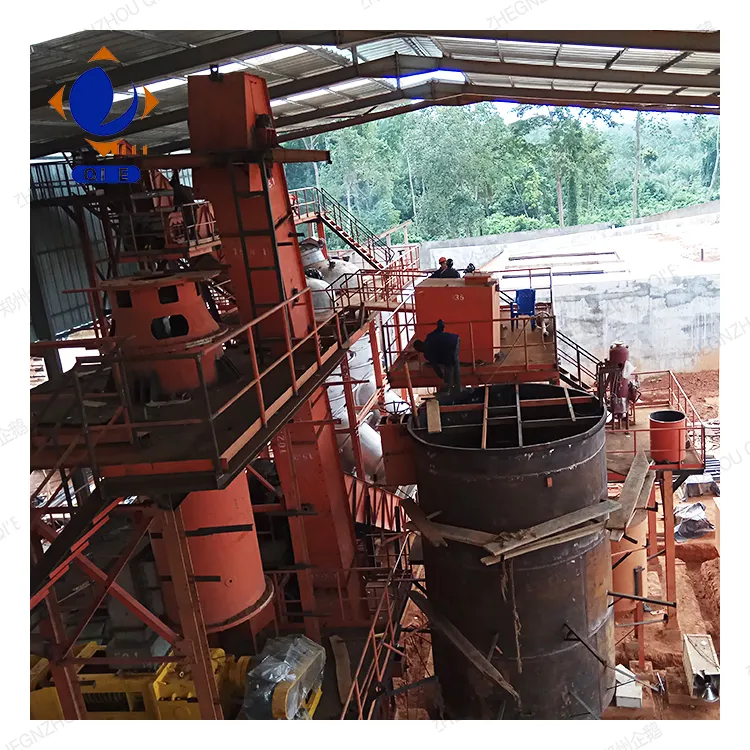
In the highly competitive international palm oil market, meeting export standards is crucial for medium - and small - sized oil mills. This article delves deep into the synergy of cold and hot pressing in palm oil refining, aiming to provide practical guidance for enterprises to enhance product quality and compliance.
The hot - pressing process in palm oil refining has been a long - standing method. In most traditional hot - pressing operations, the oil is extracted by applying high - temperature conditions (usually between 100°C - 120°C). This process can achieve a high oil yield, often reaching around 90%. The high temperature can break down the cellular structure of palm fruits more effectively, releasing more oil. However, it may also lead to some drawbacks, such as the degradation of certain nutrients and the formation of unwanted by - products.
On the other hand, the cold - pressing process is carried out at a relatively low temperature, typically below 40°C. Cold - pressed palm oil retains more natural nutrients, such as vitamin E and antioxidants. The oil yield in cold - pressing is generally around 70% - 75%, but the quality of the oil in terms of purity and stability is higher in some aspects. For example, the content of free fatty acids in cold - pressed palm oil is usually less than 0.5%, while in hot - pressed oil, it may reach 1% - 2% without proper refining.
By combining cold and hot pressing processes, enterprises can take advantage of the strengths of both methods. In the initial stage, cold pressing can be used to extract high - quality oil with rich nutrients. Then, the remaining palm residues can undergo hot pressing to increase the overall oil yield. This combined process not only improves the quality of the final product but also reduces waste.
Key parameters in the collaborative process are crucial. For temperature control, during the transition from cold to hot pressing, a gradual increase in temperature is recommended to avoid sudden changes that may affect oil quality. The optimal temperature for the second - stage hot pressing after the initial cold pressing is about 80°C - 90°C, which can ensure both high oil yield and good oil quality.
In terms of degumming, an efficient degumming method can significantly improve the quality of the refined oil. A common degumming process involves adding phosphoric acid to the crude oil, with an addition rate of about 0.1% - 0.2% based on the oil weight. This can remove impurities such as phosphatides and gums more effectively.
International standards for palm oil export emphasize product quality, environmental protection, and sustainable development. The combined cold - and hot - pressing process can help enterprises meet these requirements. For example, by enhancing oil purity and reducing the use of chemicals in the refining process, it can meet the strict quality limitations of the European and American markets. Moreover, the process is more energy - efficient compared to traditional single - process methods, which is in line with the growing environmental awareness in the international community.
In actual production, some common problems may occur, such as excessive free - fatty acid content and poor degumming efficiency. If the free - fatty acid content is too high, an additional neutralization step can be added, using sodium hydroxide solution with a concentration of about 10% - 15% for neutralization. For poor degumming efficiency, adjusting the type and dosage of degumming agents or increasing the reaction time can be effective solutions.
In conclusion, the combination of cold and hot pressing in palm oil refining is a powerful strategy for medium - and small - sized oil mills to enhance product quality and competitiveness in the international market. By implementing the scientific process described in this article, enterprises can not only meet international export standards but also achieve green and efficient production.
 High - efficiency and energy - saving palm oil refining equipment
Equipment selection for small and medium - sized palm oil mills
Palm oil refining energy consumption standards
PLC - controlled palm oil equipment
Palm oil production automation solutions
Palm oil refiner operation process
Palm oil refining equipment maintenance
Small - scale palm oil production line
Economical refiner usage skills
Palm oil processing equipment safety operation
Economical palm oil refining production line
Small and medium - sized enterprise palm oil equipment
Full - process palm oil processing
Palm oil production efficiency improvement
Palm oil equipment case sharing
Modular palm oil refining equipment
Solutions for small and medium - sized oil mills
Palm oil equipment installation and commissioning guide
Advantages of carbon steel refining equipment
Energy - saving and environmental - friendly palm oil production line
Small and medium - sized palm oil refining production line
Palm oil refining equipment selection
Palm oil processing full - process solutions
Energy - saving oil refining equipment
PLC - controlled palm oil production line
High - efficiency and energy - saving palm oil refining equipment
Equipment selection for small and medium - sized palm oil mills
Palm oil refining energy consumption standards
PLC - controlled palm oil equipment
Palm oil production automation solutions
Palm oil refiner operation process
Palm oil refining equipment maintenance
Small - scale palm oil production line
Economical refiner usage skills
Palm oil processing equipment safety operation
Economical palm oil refining production line
Small and medium - sized enterprise palm oil equipment
Full - process palm oil processing
Palm oil production efficiency improvement
Palm oil equipment case sharing
Modular palm oil refining equipment
Solutions for small and medium - sized oil mills
Palm oil equipment installation and commissioning guide
Advantages of carbon steel refining equipment
Energy - saving and environmental - friendly palm oil production line
Small and medium - sized palm oil refining production line
Palm oil refining equipment selection
Palm oil processing full - process solutions
Energy - saving oil refining equipment
PLC - controlled palm oil production line









.png?x-oss-process=image/resize,h_100,m_lfit/format,webp)
.png?x-oss-process=image/resize,h_100,m_lfit/format,webp)
.png?x-oss-process=image/resize,h_100,m_lfit/format,webp)