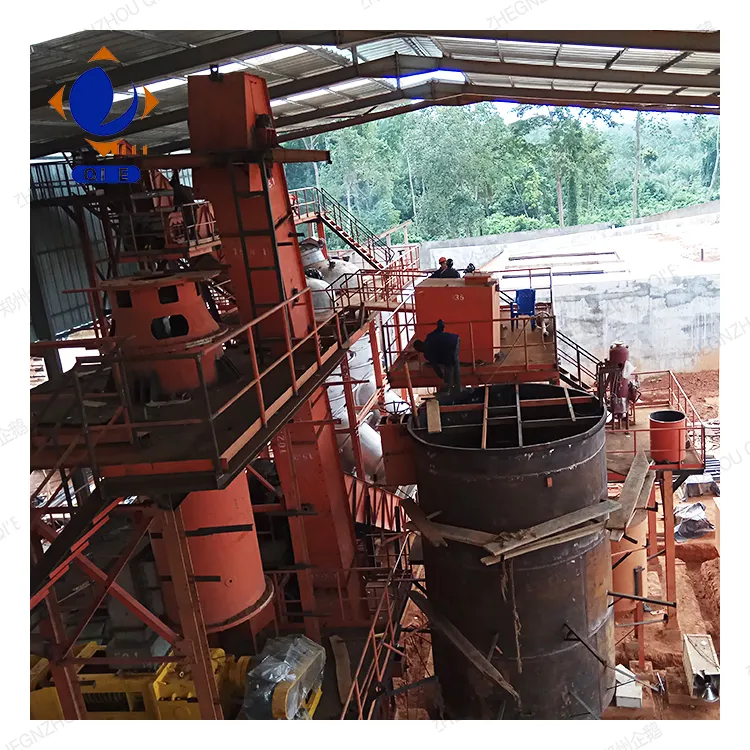
In the palm oil processing industry, many small and medium - sized oil mills face significant challenges, such as unstable oil quality and high energy consumption. These issues not only affect the competitiveness of products but also restrict the development of enterprises in the international market. In this context, understanding the cold - pressing and hot - pressing processes of palm oil and how to optimize their parameters is crucial.
The cold - pressing process of palm oil is carried out at relatively low temperatures, usually below 60°C. This method can effectively preserve the natural nutrients and flavors of the oil, ensuring high - quality products. For example, it can retain more vitamin E and antioxidants, which improves the nutritional value of the oil. On the other hand, the hot - pressing process is conducted at higher temperatures, often between 100 - 120°C, which can significantly improve the oil yield. In some cases, the oil yield can reach up to 85%, which is much higher than that of cold - pressing. The following table compares the two processes:
| Process | Temperature | Oil Yield | Nutrient Retention |
|---|---|---|---|
| Cold - Pressing | Below 60°C | About 60 - 70% | High |
| Hot - Pressing | 100 - 120°C | Up to 85% | Low |
Combining the cold - pressing and hot - pressing processes can achieve complementary advantages in terms of quality and yield. The key to this process lies in the control of key parameters, especially temperature and degumming efficiency. The temperature range for the combined process should be carefully adjusted. In the pre - treatment stage, the temperature can be controlled at around 70 - 80°C to ensure the initial degumming effect. During the pressing stage, the temperature can be gradually increased according to the process requirements, but it should not exceed 120°C to avoid excessive damage to the nutrients in the oil.
Regarding degumming efficiency, adding an appropriate amount of phosphoric acid or citric acid can effectively remove impurities and gums in the oil. The dosage of these additives usually accounts for about 0.1 - 0.3% of the oil weight.
In actual production, problems such as emulsification and inefficient water washing often occur. For emulsification problems, adding an appropriate amount of demulsifier can effectively break the emulsion. The dosage of the demulsifier is generally about 0.05 - 0.1% of the oil weight. In terms of water washing optimization, increasing the water temperature to about 80 - 90°C and using multiple - stage water washing can improve the washing effect and remove more impurities.
In a real - world case, a small - sized palm oil mill in Malaysia adopted the combined cold - pressing and hot - pressing process and optimized the parameters according to the above methods. As a result, the oil quality stability increased by 30%, and the energy consumption was reduced by 20%.
The combination of cold - pressing and hot - pressing processes meets the international safety and green standards. It not only reduces energy consumption but also improves the quality of palm oil, which is in line with the current trend of sustainable development. Many international markets have set strict requirements for the quality and environmental protection of palm oil, and this process can help enterprises meet these requirements and enhance their export capabilities.
We encourage readers to share their operational experiences and feedback. If you want to learn more about efficient palm oil refining solutions and get professional advice, please contact Penguin Group.
 équipement de raffinage d'huile de palme
entretien quotidien
normes de sécurité
contrôle PLC
raffinage d'huile de palme pour petites entreprises
raffinage de l'huile de palme
système PLC
procédé de pressage chaud et froid
automatisation des usines de transformation des huiles
gestion intelligente des processus alimentaires
Ligne de production de raffinage d'huile de palme
Sélection d'équipements pour l'huile de palme
Analyse du processus de l'huile de palme
Ligne de production d'huile de palme de petite et moyenne taille
Solutions de transformation des produits céréaliers et oléagineux
Équipements modulaires de raffinage d'huile de palme
Petites et moyennes usines d'huile de palme
Extension de la capacité de production d'huile de palme
Avantages des équipements en acier au carbone
Efficacité énergétique des technologies brevetées nationales
Ligne de raffinage d'huile de palme
Extraction des fruits de palme
Procédé de déodorisation du raffinage
Sélection d'équipements pour les PME
Équipements pour l'industrie des grains et des huiles
équipement de raffinage d'huile de palme
entretien quotidien
normes de sécurité
contrôle PLC
raffinage d'huile de palme pour petites entreprises
raffinage de l'huile de palme
système PLC
procédé de pressage chaud et froid
automatisation des usines de transformation des huiles
gestion intelligente des processus alimentaires
Ligne de production de raffinage d'huile de palme
Sélection d'équipements pour l'huile de palme
Analyse du processus de l'huile de palme
Ligne de production d'huile de palme de petite et moyenne taille
Solutions de transformation des produits céréaliers et oléagineux
Équipements modulaires de raffinage d'huile de palme
Petites et moyennes usines d'huile de palme
Extension de la capacité de production d'huile de palme
Avantages des équipements en acier au carbone
Efficacité énergétique des technologies brevetées nationales
Ligne de raffinage d'huile de palme
Extraction des fruits de palme
Procédé de déodorisation du raffinage
Sélection d'équipements pour les PME
Équipements pour l'industrie des grains et des huiles


.png?x-oss-process=image/resize,h_100,m_lfit/format,webp)
.png?x-oss-process=image/resize,h_100,m_lfit/format,webp)
.png?x-oss-process=image/resize,h_100,m_lfit/format,webp)